
Recent Post
- 2026-08-19 00:30:34
- 2026-08-14 04:31:35
- 2026-07-09 04:31:15



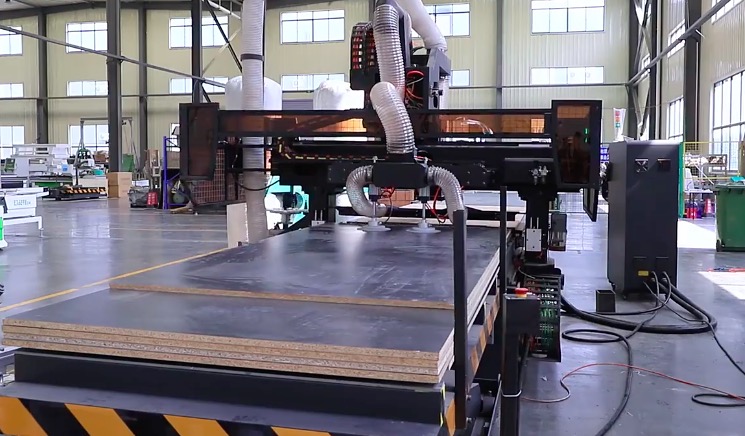
The transition from manual granite drilling to automated CNC machining centers is redefining productivity benchmarks in stone fabrication, with multi-axis tool-changing platforms emerging as the industry standard.
Granite fabrication has long been characterized by its physical demands—high material hardness, abrasive dust, and tight tolerances that leave little room for error. While the stone industry was slower than its woodworking and metalworking counterparts to adopt fully automated CNC solutions, the past decade has witnessed a decisive shift. The proliferation of bridge saws with drilling capabilities, and more importantly, the adaptation of heavy-duty CNC routers and machining centers for stone, has changed the calculus for fabricators. This article examines the technical parameters driving this shift, the role of tool-changing automation, and the market forces shaping equipment acquisition.
Market Context and the Economics of Automation
The global stone fabrication equipment market has grown steadily, driven by residential and commercial construction activity, particularly in North America, Southeast Asia, and the Middle East. The economic case for automated granite drilling rests on three pillars: labor cost reduction, throughput consistency, and material yield.
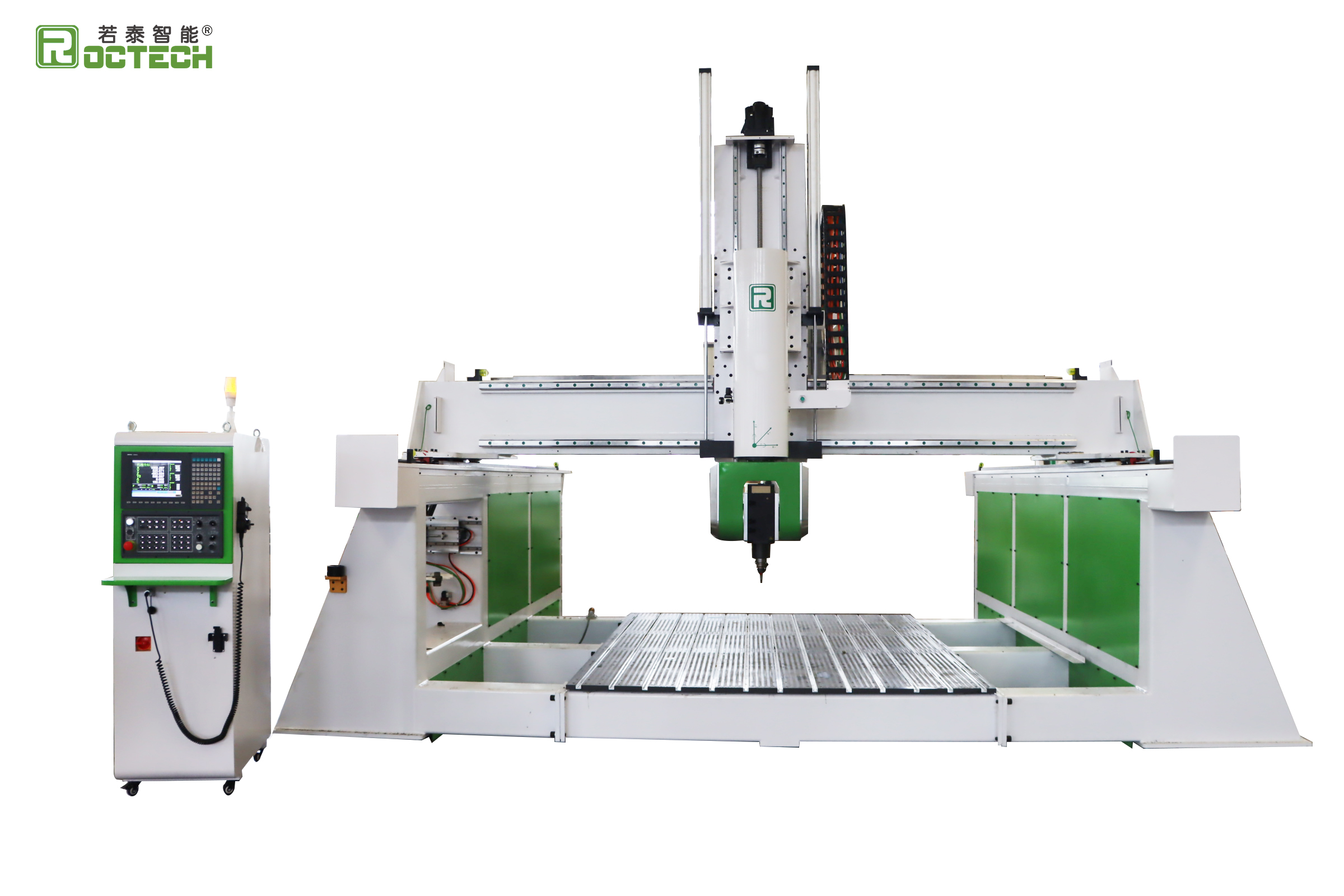
A common misconception is that granite drilling requires specialized, high-torque rotary heads alone. In practice, modern CNC routers equipped with water-cooled spindles and rigid gantry structures handle granite drilling effectively when paired with the correct tooling and feed parameters. The critical differentiator, however, is the ability to perform multiple operations—drilling, profiling, polishing, and cutting—in a single setup. This is where automatic tool changer (ATC) platforms have gained significant traction.
| Machine Category | Typical Spindle Power (kW) | Max Drilling Diameter (mm) | Tool Magazine Capacity | Approx. Investment Range (USD) | Typical Application |
|---|---|---|---|---|---|
| Manual Bridge Drill | 3–5.5 | 12–25 | None | 8,000–25,000 | Simple hole drilling, low volume |
| 3-Axis CNC Router (Stone-Dedicated) | 5.5–9 | 12–35 | 4–8 | 30,000–60,000 | Countertop cutouts, sink drilling |
| ATC Machining Center (Stone-Ready) | 9–12 | 12–50 | 8–16 | 60,000–120,000 | Multi-process: drilling, profiling, edge finishing |
| 5-Axis Stone Machining Center | 10–15 | 12–60 | 12–24 | 150,000–350,000 | Complex 3D stone work, monuments, curved surfaces |
As the table indicates, the investment gap between entry-level CNC routers and full ATC machining centers is substantial. Yet the return on investment for mid-to-high-volume fabrication shops favors the ATC platform. A machine that can drill, route, and polish without operator intervention between tool changes reduces cycle time by 30–50% compared to single-operation machines. Furthermore, the integration of vacuum adsorption tables—a feature standard on Roctech’s ATC series—ensures stable workpiece fixation, which is non-negotiable when drilling granite at feed rates above 3,000 mm/min.
Technical Considerations for Granite Drilling on CNC Routers
Granite presents unique challenges not encountered in wood or aluminum processing. Its compressive strength and abrasive nature demand diamond-tipped or carbide-tipped tooling, and the machining parameters must be carefully controlled to prevent thermal damage to the stone and premature tool wear.
Spindle selection is the first critical decision. For granite, a water-cooled spindle in the 9–12 kW range is recommended. Air-cooled spindles, while common in woodworking, dissipate heat less effectively under continuous load, and granite drilling is a high-torque, low-speed operation. Roctech’s RC1325S-ATC, for instance, supports spindle speeds up to 24,000 RPM, but for granite drilling, operating in the 6,000–9,000 RPM range with a controlled feed rate is typical. The spindle’s rigidity—determined by bearing quality and housing design—directly affects hole precision and surface finish around the drill entry and exit points.
Tool path strategy is equally important. Unlike metal drilling, where a single plunge is acceptable, granite often benefits from a peck-drilling cycle (G83) to clear debris and reduce heat accumulation. For larger diameter holes (above 20 mm), a helical milling approach—using an end mill in a circular interpolation—is often preferred over a drill bit, as it reduces thrust force and minimizes chipping at the stone surface. This technique requires a machine with precise circular interpolation capabilities, which is a core competency of the Syntec control system used in Roctech’s A
Looking for more information about our CNC machines and services? Contact us today.
Contact





















Granite Drilling Automation: Precision, Tooling, and the Shift Toward Multi-Process CNC Platforms - Roctech® have advanced technology for CNC Router,cnc router cabinets,Roctech already have 15 years experiences of cnc router technology.-© 2023 Roctech® Machinery Co.,Ltd. - All Rights Reserved Website Terms Of Use ● Privacy Policy ● Cookie Policy